
Introduction
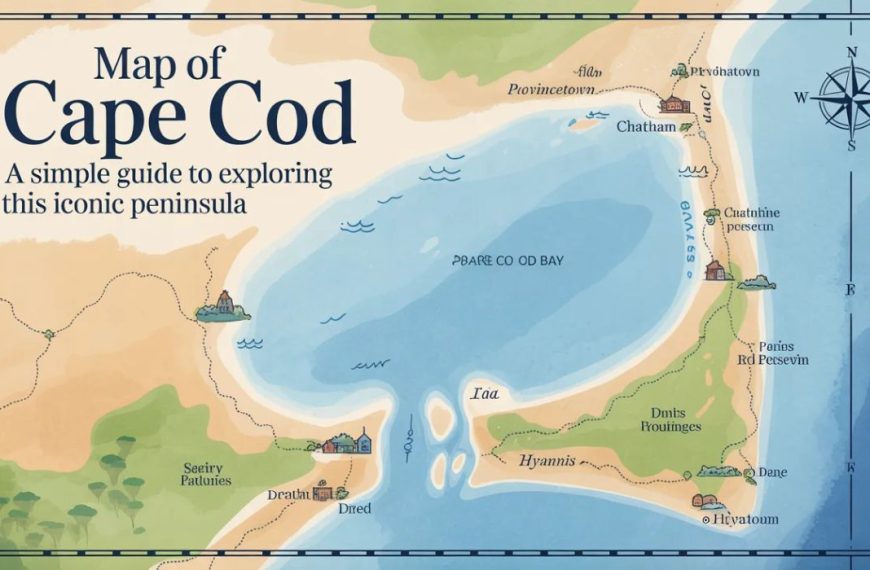
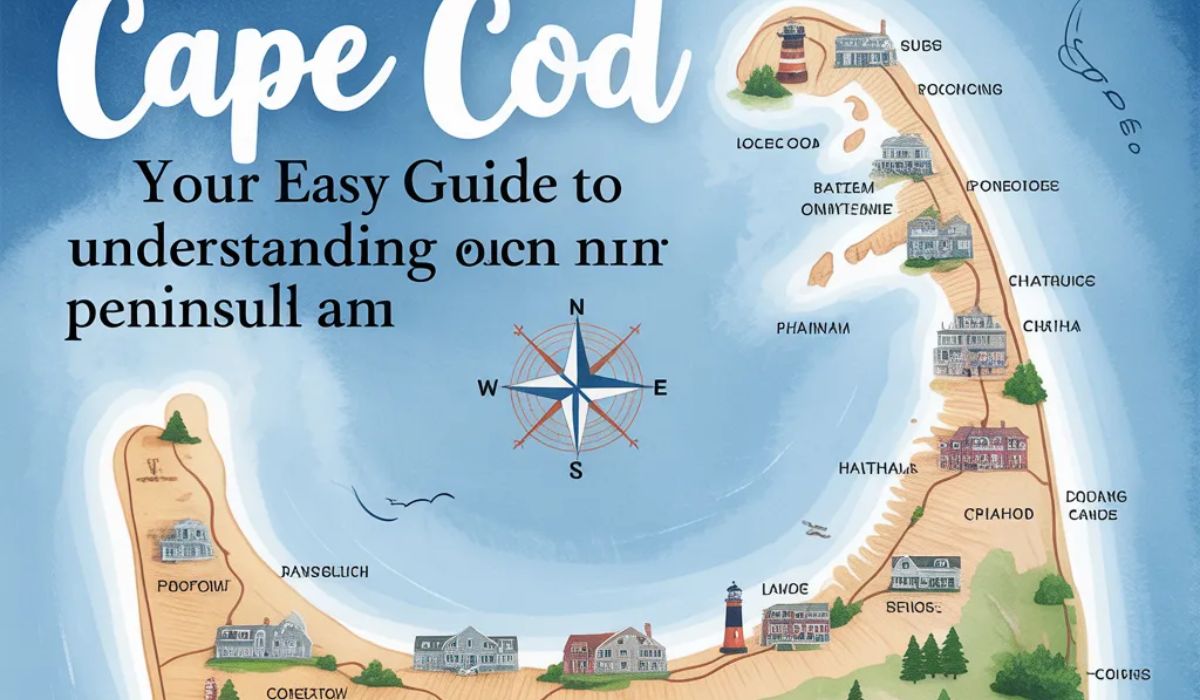
If you’ve ever looked at a map of Cape Cod, you probably noticed one thing right away—it looks like a curled arm reaching into the Atlantic Ocean. That shape alone makes Cape Cod unforgettable. But beyond its outline, a map of Cape Cod tells a much bigger story about beaches, small towns, scenic roads, and hidden gems waiting to be explored.
Whether you’re planning a vacation, learning about New England geography, or just curious, understanding a map of Cape Cod is like having a key to unlock the region. Let’s break it all down in a friendly, simple way—no compass skills required.
What Is Cape Cod?
Cape Cod is a peninsula in Massachusetts, stretching into the Atlantic Ocean. It’s famous for sandy beaches, seafood, lighthouses, and charming coastal towns.
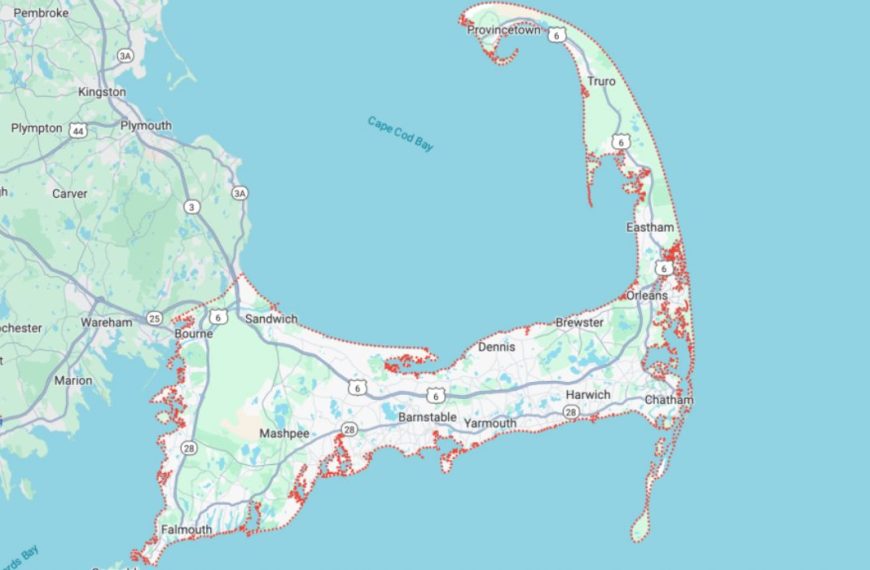
On a map of Cape Cod, you’ll see it separated from mainland Massachusetts by the Cape Cod Canal, which turns the Cape into something like an island—without fully being one.
Why a Map of Cape Cod Matters
Why does a map matter so much here? Because Cape Cod isn’t just one place—it’s many places stitched together.
A good map of Cape Cod helps you:
-
Understand distances between towns
-
Find beaches and parks
-
Avoid traffic bottlenecks
-
Plan day trips efficiently
Think of it like a menu at a big restaurant. Without it, you might miss the best dishes.
The Unique Shape of Cape Cod
Cape Cod’s famous hook-shaped curve is impossible to ignore. On the map, it looks like an arm bent at the elbow.
This shape affects:
-
Weather patterns
-
Driving routes
-
Beach locations
The curve also divides the Cape into regions, which you’ll see clearly on most maps.
Upper Cape Towns
The Upper Cape is closest to the mainland. On a map of Cape Cod, these towns sit near the canal.
Key towns include:
-
Bourne
-
Falmouth
-
Sandwich
-
Mashpee
This area is often quieter and more residential, making it a popular choice for families.
Mid-Cape Towns
The Mid-Cape is the commercial heart of the region. If Cape Cod were a wheel, this would be the hub.
Mid-Cape towns include:
-
Barnstable
-
Yarmouth
-
Dennis
On the map, you’ll notice major shopping areas and main roads passing through here.
Lower Cape Towns
Moving east on the map of Cape Cod, you’ll reach the Lower Cape.
Towns here include:
-
Brewster
-
Chatham
-
Harwich
-
Orleans
This area balances charm and activity, with harbors, beaches, and historic villages.
Outer Cape Towns
The Outer Cape forms the hook of Cape Cod. On the map, this is where the land curves dramatically.
Outer Cape towns include:
-
Eastham
-
Wellfleet
-
Truro
-
Provincetown
This region feels more remote and artistic, with dramatic coastlines and wide-open beaches.
Major Roads and Highways
A map of Cape Cod would be incomplete without its roads.
Key routes include:
-
Route 6 – The main highway running through the Cape
-
Route 28 – A scenic coastal road
-
Route 6A – Historic and slower, but charming
These roads act like veins, connecting every town.
Beaches on the Map
Cape Cod has beaches on both sides—the bay side and the ocean side.
On the map, you’ll find:
-
Calmer bay beaches (great for kids)
-
Wilder ocean beaches (perfect for surfing)
Knowing which side you’re on makes a big difference in your beach day.
Cape Cod National Seashore
One of the most important features on a map of Cape Cod is the Cape Cod National Seashore.
It covers a large portion of the Outer Cape and includes:
-
Protected beaches
-
Sand dunes
-
Walking trails
-
Historic lighthouses
This area is preserved land, meaning development is limited.
Ferries and Water Routes
Maps also show ferry routes, which are easy to overlook.
From Cape Cod, ferries travel to:
-
Martha’s Vineyard
-
Nantucket
These routes are marked on most detailed maps and are essential for island hopping.
Tourist Attractions by Location
A good map of Cape Cod helps you spot attractions fast.
Examples include:
-
Provincetown Harbor
-
Chatham Lighthouse
-
Whale watching docks
-
Museums and nature centers
Seeing them visually helps you group visits efficiently.
Reading a Map of Cape Cod Easily
Maps don’t have to be confusing. Start simple:
-
Look for town names
-
Identify main roads
-
Notice water boundaries
Once you get the hang of it, the map starts telling a story instead of feeling overwhelming.
Digital vs Paper Maps
Should you use a digital map or a paper one?
Digital maps:
-
Great for live directions
-
Show traffic updates
Paper maps:
-
Never lose signal
-
Give a big-picture view
Many visitors use both for the best experience.
Using a Map to Plan the Perfect Trip
A map of Cape Cod is your planning partner.
Use it to:
-
Choose where to stay
-
Pick beaches nearby
-
Avoid long drives
-
Discover lesser-known towns
It turns a good trip into a great one.
Conclusion
A map of Cape Cod is more than lines and labels—it’s a guide to adventure. From quiet villages to lively harbors, every part of the Cape has its place on the map and its own personality.
Once you understand how to read it, Cape Cod feels less like a maze and more like a welcoming path. And honestly, isn’t that what a great map should do?
Frequently Asked Questions (FAQs)
1. What does a map of Cape Cod show most clearly?
It shows towns, roads, beaches, and the unique shape of the peninsula.
2. How many regions are shown on a map of Cape Cod?
Typically four: Upper, Mid, Lower, and Outer Cape.
3. Which road is most important on the map of Cape Cod?
Route 6 is the main highway running through the Cape.
4. Are ferry routes included on a map of Cape Cod?
Yes, most detailed maps show ferries to nearby islands.
5. Is a paper map of Cape Cod still useful today?
Absolutely, especially for getting an overall view of the area.
for more visita: urbannestle

 By
By