
Introduction
Have you ever looked at a map of Cape Cod and thought, Wow, it really does look like an arm? You’re not wrong. Cape Cod’s unique shape, charming towns, and endless coastline make it one of the most fascinating places in the United States to explore.
Whether you’re planning a vacation, daydreaming about sandy beaches, or just curious about geography, understanding the map of Cape Cod is like having a key to a treasure chest. Once you know how it’s laid out, everything—from finding the best seafood to reaching hidden beaches—gets a whole lot easier.
What Is Cape Cod and Where Is It Located?
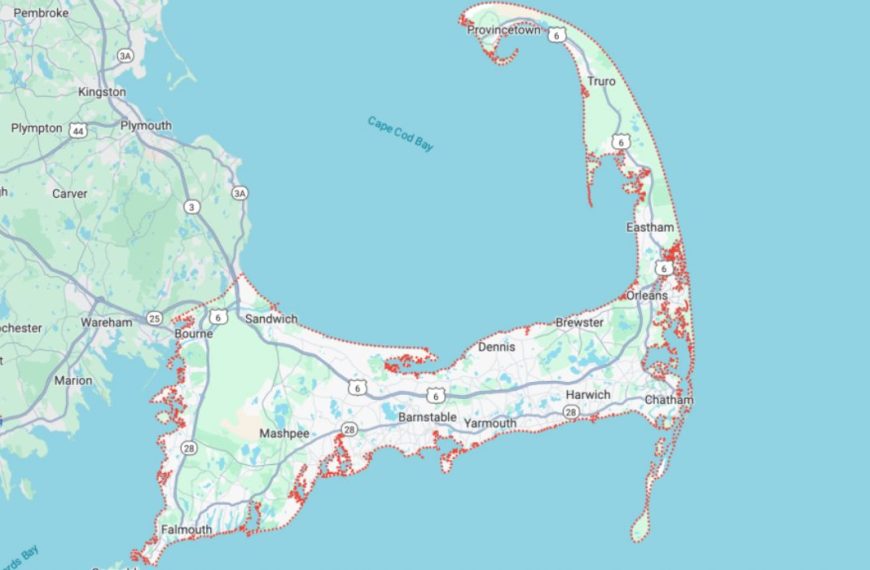
Cape Cod is a peninsula in eastern Massachusetts, stretching into the Atlantic Ocean. It’s separated from the mainland by the Cape Cod Canal, which makes it feel like a world of its own.
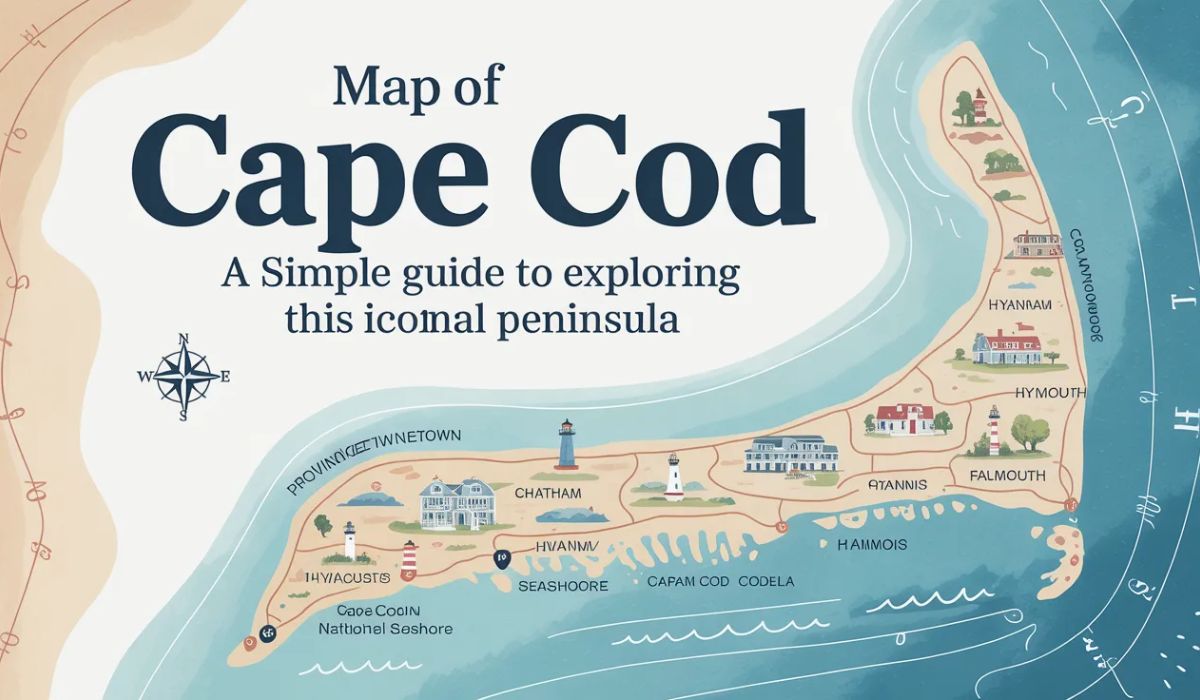
On a map of Cape Cod, you’ll see it extending east and then curving north, surrounded by water on nearly all sides. This location is a big reason why Cape Cod is famous for beaches, fishing, and scenic views.
Understanding the Shape of Cape Cod
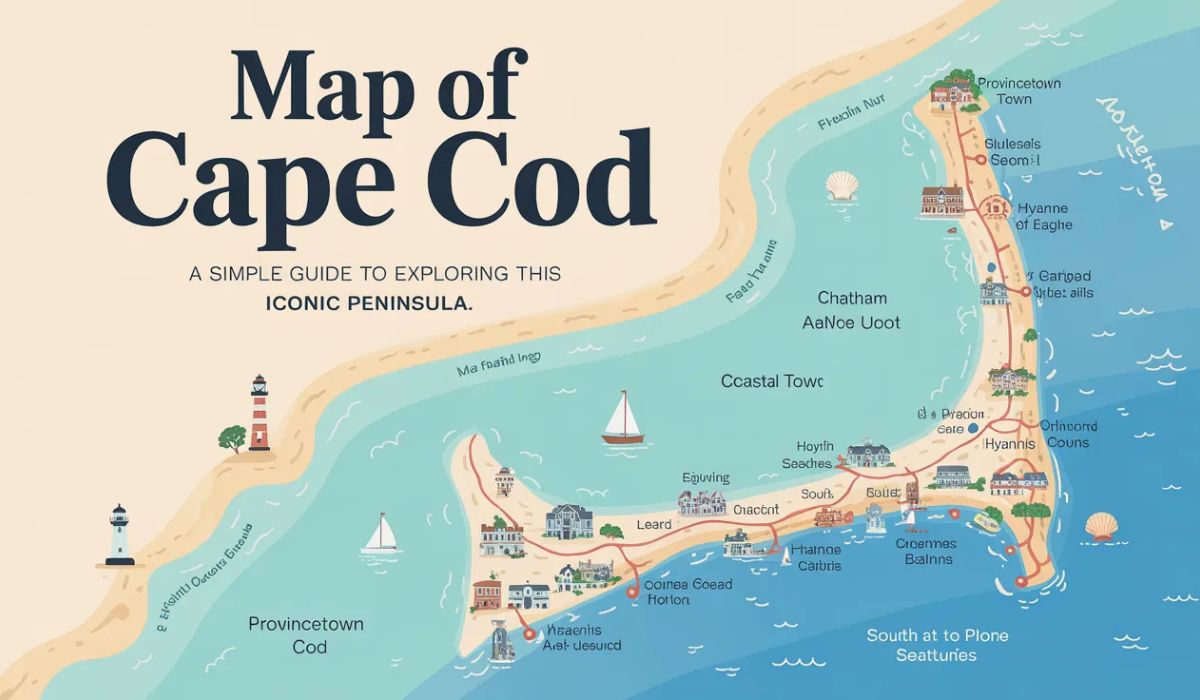
Let’s talk about that famous shape. Cape Cod is often compared to a bent arm. The shoulder starts near the canal, the elbow sits around Chatham, and the hand curls up at Provincetown.
This shape isn’t just fun trivia—it actually helps when reading a map of Cape Cod. Once you picture the arm, it’s easier to understand directions and distances. Going “up the Cape” usually means heading toward the Outer Cape and Provincetown.
Why a Map of Cape Cod Is So Useful
Why does a map matter so much here? Because Cape Cod isn’t one single town—it’s a collection of many unique places, each with its own personality.
A good map of Cape Cod helps you:
-
Plan efficient travel routes
-
Find beaches and attractions
-
Understand town boundaries
-
Avoid unnecessary backtracking
Without a map, getting around can feel like wandering a maze. With one, it’s more like following a well-marked trail.
Upper Cape: The Gateway to Cape Cod
The Upper Cape is the first region you’ll see on a map of Cape Cod when coming from the mainland. It includes towns like Falmouth, Sandwich, and Bourne.
This area is known for:
-
Easy access via bridges
-
Family-friendly beaches
-
Historic villages
It’s often less crowded than other parts of the Cape, making it a great starting point for exploration.
Mid-Cape: The Central Hub
The Mid-Cape sits right in the middle of the peninsula and acts as the commercial heart of the region.
Towns like Hyannis, Barnstable, and Yarmouth appear prominently on any map of Cape Cod. This area is known for:
-
Shopping and dining
-
Transportation centers
-
Lively downtown areas
If Cape Cod were a wheel, the Mid-Cape would be the hub connecting everything.
Lower Cape: History and Natural Beauty
Moving east on the map, you’ll reach the Lower Cape, which includes towns such as Dennis, Harwich, and Chatham.
This region blends:
-
Historic charm
-
Quiet neighborhoods
-
Scenic harbors
On a map of Cape Cod, the Lower Cape is where things start to feel more relaxed and less commercial.
Outer Cape: Beaches and National Seashore
The Outer Cape is the final stretch, wrapping up toward the tip of the peninsula. Towns like Eastham, Wellfleet, Truro, and Provincetown dominate this section.
This area is famous for:
-
Cape Cod National Seashore
-
Dramatic ocean beaches
-
Artistic and cultural communities
On the map, this is where Cape Cod feels wild, open, and deeply connected to nature.
Major Towns on the Map of Cape Cod
A map of Cape Cod highlights over a dozen towns, each offering something different. Some of the most well-known include:
-
Hyannis – Transportation and shopping center
-
Chatham – Charming downtown and lighthouse
-
Provincetown – Arts, nightlife, and beaches
-
Falmouth – Ferry access and coastal beauty
Knowing where these towns sit helps you plan smarter trips.
Cape Cod Beaches and Coastal Areas
One of the best reasons to look at a map of Cape Cod is to find beaches. The Cape has:
-
Bay-side beaches (calmer waters)
-
Ocean-side beaches (bigger waves)
-
Sound-side beaches (warmer water)
Maps often mark public beach access points, which is incredibly helpful during busy summer months.
Roads, Highways, and Travel Routes
Cape Cod may look small, but traffic can be tricky. A map of Cape Cod shows major routes like:
-
Route 6, the main highway
-
Route 28, a scenic alternative
-
Local roads connecting towns
Understanding these routes can save you time and frustration, especially during peak tourist season.
Ferries and Water Routes on the Map
Cape Cod isn’t just about driving. Ferry routes are often marked on a map of Cape Cod, showing connections to:
-
Martha’s Vineyard
-
Nantucket
-
Boston
These water routes add flexibility and a bit of adventure to your travel plans.
Parks, Trails, and Outdoor Spaces
Cape Cod is full of green spaces, and maps make them easy to find. From bike trails to nature reserves, a map of Cape Cod highlights:
-
Cape Cod Rail Trail
-
National Seashore paths
-
Local conservation areas
These spots are perfect for walking, biking, or just soaking in the scenery.
Tourist Attractions and Landmarks
Lighthouses, museums, and historic sites often appear on detailed maps. Using a map of Cape Cod, you can locate:
-
Nauset Light
-
Heritage Museums & Gardens
-
Pilgrim Monument
These landmarks help you connect the map to real-world experiences.
Using Digital vs. Printed Maps
So, should you use your phone or a paper map? Both have their place.
Digital maps offer real-time directions and traffic updates.
Printed maps give you a big-picture view and don’t rely on cell service.
Many travelers use both when navigating Cape Cod.
Tips for Reading a Map of Cape Cod Like a Local
Want to feel like you belong? Here are some simple tips:
-
Learn the regions (Upper, Mid, Lower, Outer)
-
Note bridge locations
-
Check beach orientation
-
Plan trips by area, not distance
Once you do this, the map of Cape Cod starts to feel familiar, not confusing.
Conclusion
A map of Cape Cod is more than lines and labels—it’s a storybook of beaches, towns, and timeless coastal charm. Once you understand how the Cape is laid out, exploring it feels less like guessing and more like discovering. Whether you’re visiting for a weekend or dreaming from afar, the map is your guide, your compass, and your invitation to explore.
Frequently Asked Questions (FAQs)
1. Why does Cape Cod look like an arm on the map?
Its shape was formed by glaciers thousands of years ago, creating the curved “arm” appearance seen on every map of Cape Cod.
2. What is the best map of Cape Cod for tourists?
A detailed road and town map is best, especially one that shows beaches, attractions, and ferry routes.
3. How many towns are shown on a map of Cape Cod?
Most maps show 15 towns, each with its own borders and local highlights.
4. Are beaches clearly marked on a map of Cape Cod?
Yes, many maps highlight public beaches and coastal access points for easy planning.
5. Is it better to use a digital or paper map of Cape Cod?
Both are useful—digital maps help with navigation, while paper maps provide a clear overall view of the region.
for more visit : urbannestle


 By
By